


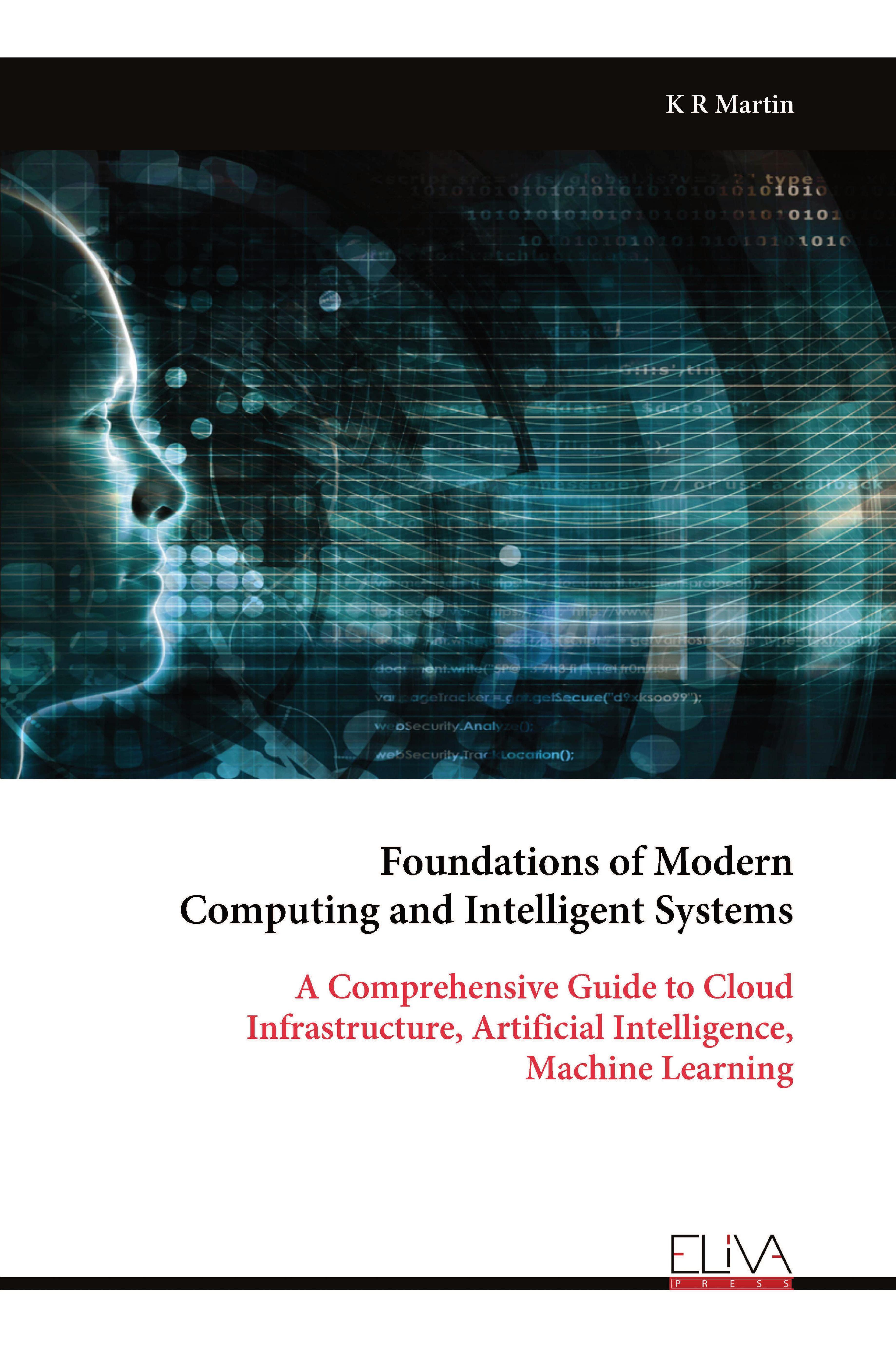
Foundations of Modern Computing and Intelligent Systems
$ 54.5
Description
Leave review
Description
In an era defined by rapid technological transformation, the boundaries between distinct computing disciplines are dissolving. Foundations of Modern Computing and Intelligent Systems offers a comprehensive, top-down exploration of the four monumental pillars reshaping our digital landscape: Cloud Infrastructure, Artificial Intelligence, Machine Learning, and Quantum Computing.Structured into four distinct parts and twenty-four meticulously curated chapters, this definitive guide bridges the gap between rapidly evolving fields.
Part I demystifies Cloud Computing infrastructure, exploring service models, hypervisor and container virtualization, distributed data storage, Zero Trust security, and advanced edge computing paradigms.
Part II transitions to intelligence, tracing the evolution of Artificial Intelligence from symbolic AI to modern connectionist models.
Part III takes a deep dive into the statistical engines powering AI. It rigorously covers the Machine Learning engineering lifecycle-from the bias-variance tradeoff and core learning paradigms to deep neural architectures, Transformers, Reinforcement Learning, and scalable MLOps practices.
Part IV boldly looks to the future, unpacking the mathematical foundations of Quantum Computing. Readers will explore leading qubit hardware platforms, hybrid algorithms like VQE and QAOA, surface code error correction, and the critical transition toward Post-Quantum Cryptography.
Designed for undergraduate and graduate students, researchers, IT practitioners, and technology leaders, this book goes beyond theoretical knowledge. It is enriched with detailed technical diagrams, algorithm pseudocode, and real-world industrial case studies ranging from global financial multi-cloud migrations and predictive maintenance to molecular simulations and autonomous warehouse operations.
Authored by distinguished academics Mrs. D. Irine Auxilia Mary, Dr. I. Carol, Dr. J. Jenifer, and Dr. K. R. Martin, this volume equips readers with the holistic understanding required to innovate at the intersections of modern computing. It is an essential roadmap for navigating the post-Moore's Law era and mastering the converged future architecture.