


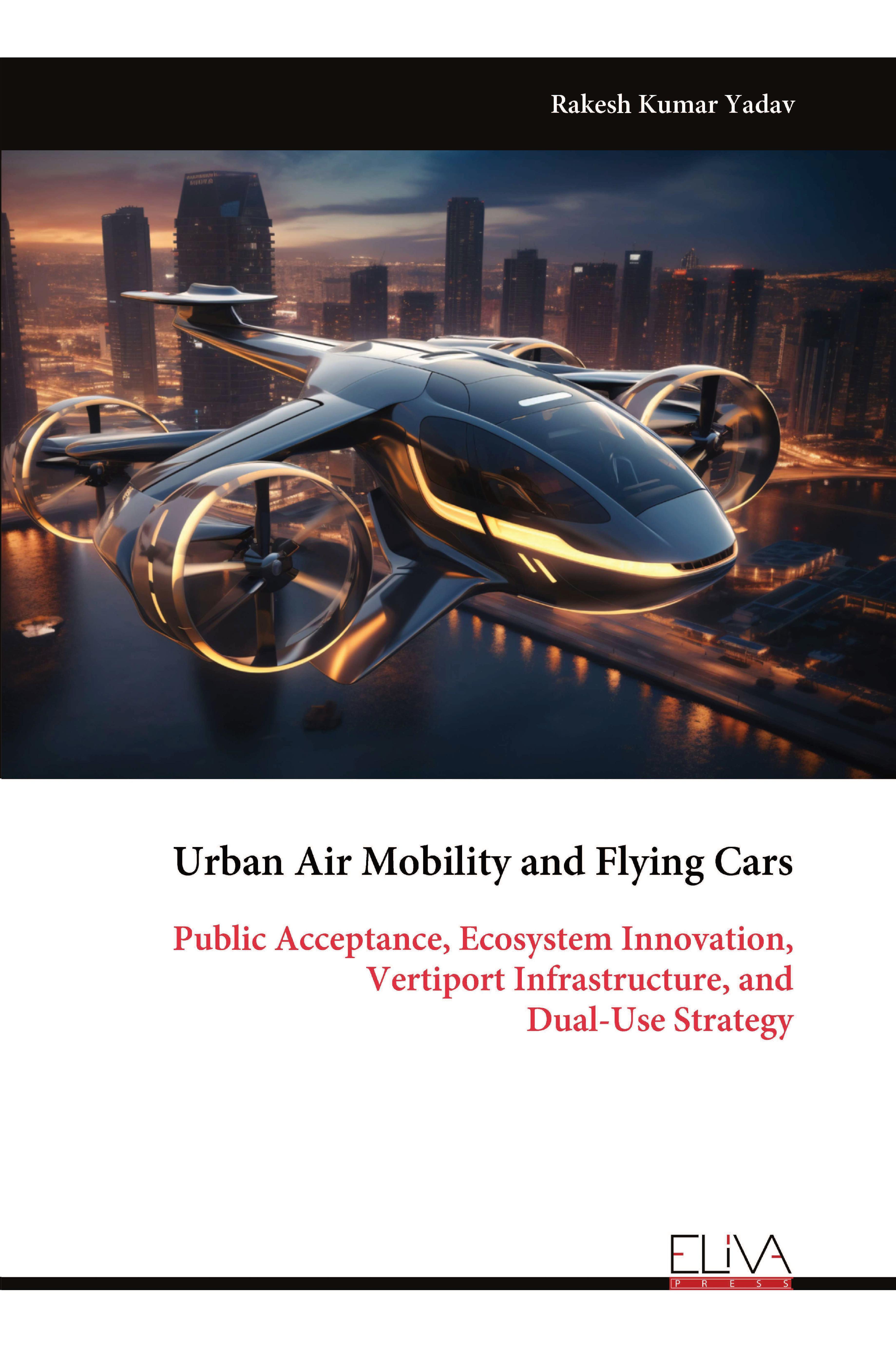
Urban Air Mobility and Flying Cars
$ 95
Description
Urban Air Mobility (UAM) offers a new way forward. UAM means using small aircraft to carry passengers and goods within and around a city. These aircraft, called Personal Aerial Vehicles (PAVs) and popularly known as “flying cars”, can avoid ground traffic by using the low-altitude airspace above the city, adding a third dimension to urban transport. Several technologies have made this possible: Distributed Electric Propulsion (DEP), which spreads lift and thrust across many small electric motors; high-energy batteries, including lithium-based and solid-state designs; autonomous (self-flying) flight control systems; and light but strong composite materials. Together they make electric Vertical Take-Off and Landing (eVTOL) aircraft possible. These aircraft promise urban journeys that are faster, quieter and cleaner, and that go directly from one point to another. Good technology alone, however, does not guarantee that flying cars will be used in real life. The central idea of this book is that UAM is a Socio-Technical System (STS), meaning a system in which people, organisations, rules and technology all depend on one another. It is also a “System of Systems” (SoS), made up of many smaller systems that must work together. For UAM to succeed, several things must line up at the same time: how people think and feel about the technology, public acceptance, land and buildings for vertiports, enough capacity in the electricity grid, aircraft safety certification, and a strategy for dual use by both civilian and defence users. The book is divided into four parts and seven chapters. It moves from the individual commuter’s mind (why a person would or would not use a flying taxi), to the wider innovation ecosystem, to the ground infrastructure that UAM needs, and finally to national defence applications. Each chapter begins with learning objectives and ends with key takeaways, review questions and a list of references.