


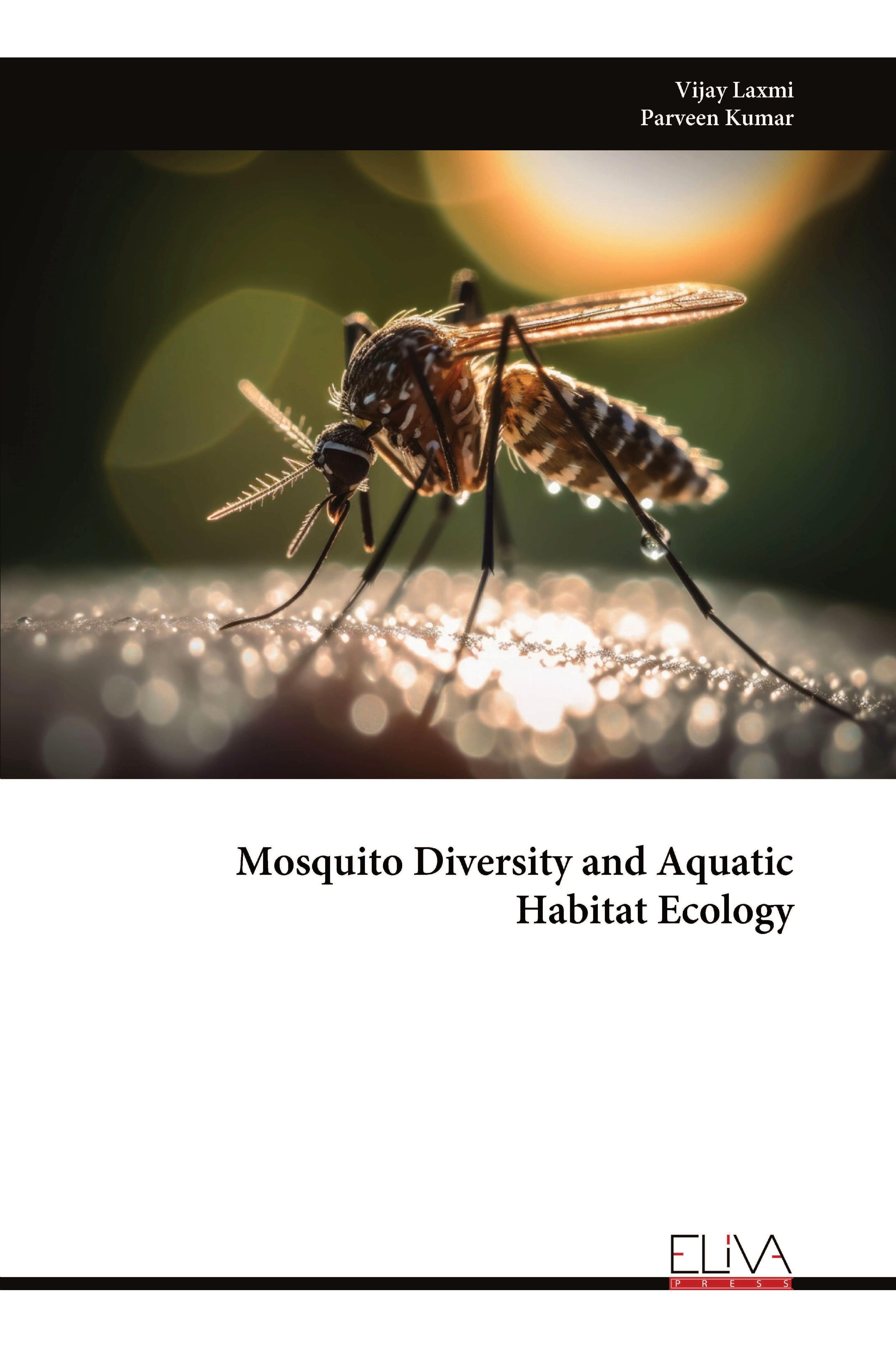
Mosquito Diversity and Aquatic Habitat Ecology
$ 54.5
Description
Mosquitoes are among the most significant vectors of infectious diseases worldwide, posing a persistent challenge to public health, particularly in tropical and subtropical regions. Their ability to adapt diverse aquatic environments enables them to thrive in natural and human-modified habitats. Among these, ponds represent important ecological niches for mosquito larval development and can support diverse populations of Anopheles, Aedes, and Culex species. This book provides a comprehensive account of mosquito ecology in pond ecosystems, with particular emphasis on Indian environmental conditions. It examines the complex relationship between pond-water characteristics and mosquito larval abundance, distribution, and breeding dynamics. Specially physicochemical parameters such as temperature, pH, dissolved oxygen, turbidity, and conductivity, as well as their influence on larval development and species composition. The book also explores the roles of microbial communities, aquatic vegetation, predators, and other ecological interactions in shaping mosquito breeding habitats. The Indian context receives particular emphasis, covering village ponds, irrigation ponds, rain-fed water bodies, and stagnant water systems. Seasonal changes in rainfall, temperature, water quality, and habitat stability are discussed in relation to mosquito abundance and species distribution. The ecological significance of pond habitats is considered alongside the public-health importance of mosquito-borne diseases, including dengue, chikungunya, malaria etc. By integrating mosquito taxonomy, aquatic ecology, environmental determinants, seasonal dynamics, and vector surveillance, this book provides a useful framework for understanding mosquito breeding in pond ecosystems. It will be valuable to students, researchers, teachers, public-health professionals, and environmental scientists to mosquito surveillance and larval source management. The book ultimately highlights the importance of understanding local aquatic ecology as a foundation for developing sustainable and effective strategies for reducing mosquito populations and mitigating the burden of mosquito-borne diseases.