


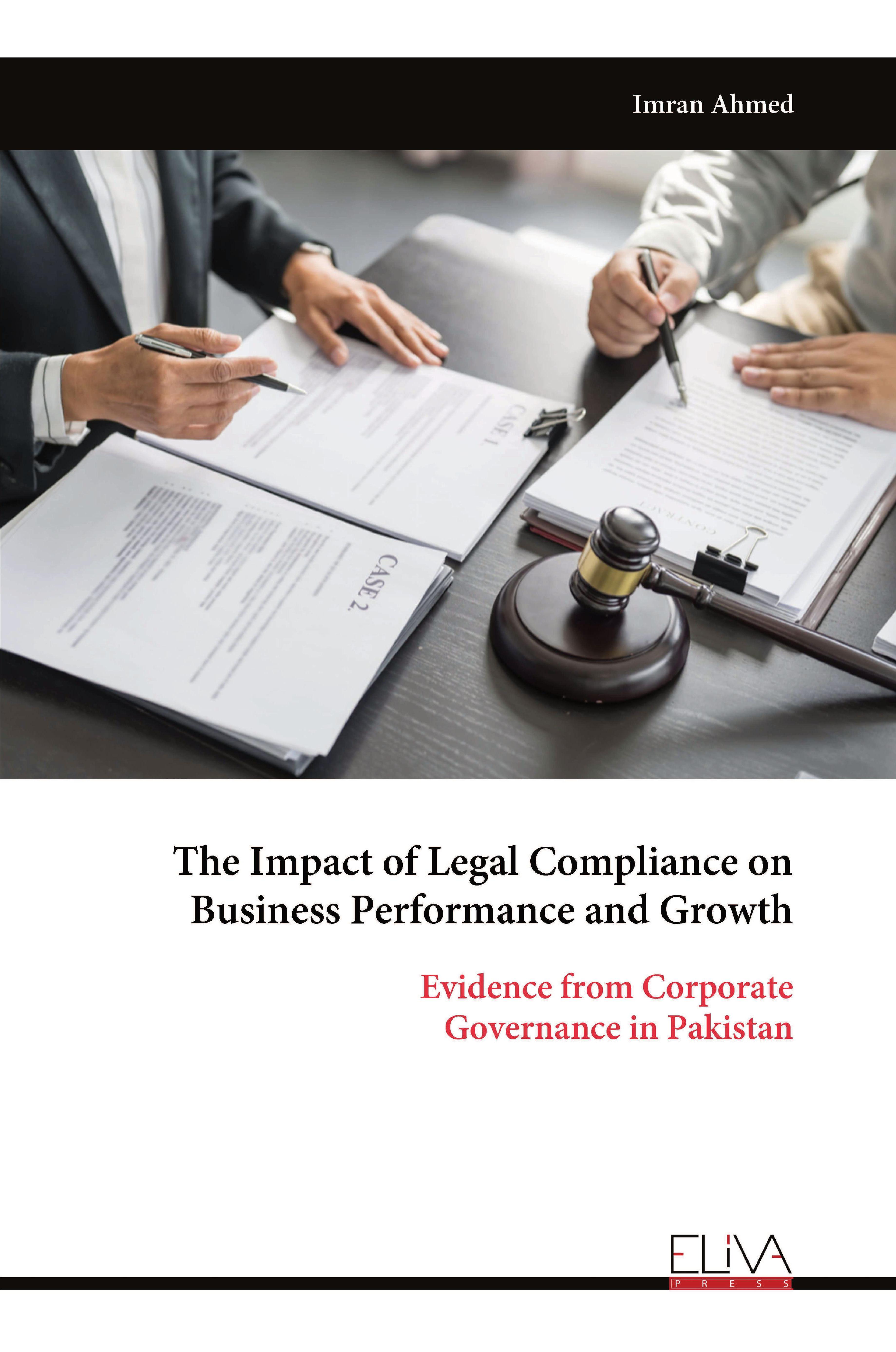
The Impact of Legal Compliance on Business Performance and Growth
$ 49.5
Description
Leave review
Description
Compliance with the law is no longer a mere regulatory obligation for modern businesses. It has become a strategic factor that shapes decision-making, reputation, investor confidence, and long-term growth. This book examines the relationship between legal compliance and business performance, with a specific focus on corporate governance requirements in Pakistan.
Drawing on qualitative, doctrinal methodology and secondary data from academic studies, SECP regulations, and the G20/OECD Principles of Corporate Governance, the book explores how compliance affects firm performance, reduces legal and regulatory risk, improves internal oversight, and influences investor and stakeholder trust. It also examines the costs and challenges of compliance, particularly for small and medium-sized enterprises, and the risks of formal compliance without real accountability.
The book argues that compliance should not be seen simply as a way to avoid penalties. When properly integrated into business strategy and corporate governance, compliance can support sustainable development, stability, and growth. The analysis highlights that the benefits of compliance are conditional — they depend on firm size, capital structure, enforcement quality, and whether compliance is substantive rather than merely formal.
This work offers practical insights for managers, boards, compliance officers, regulators, and researchers interested in corporate governance in emerging markets. It contributes to the growing literature on legal compliance and firm performance in Pakistan and provides policy recommendations for more effective and proportionate regulation.