


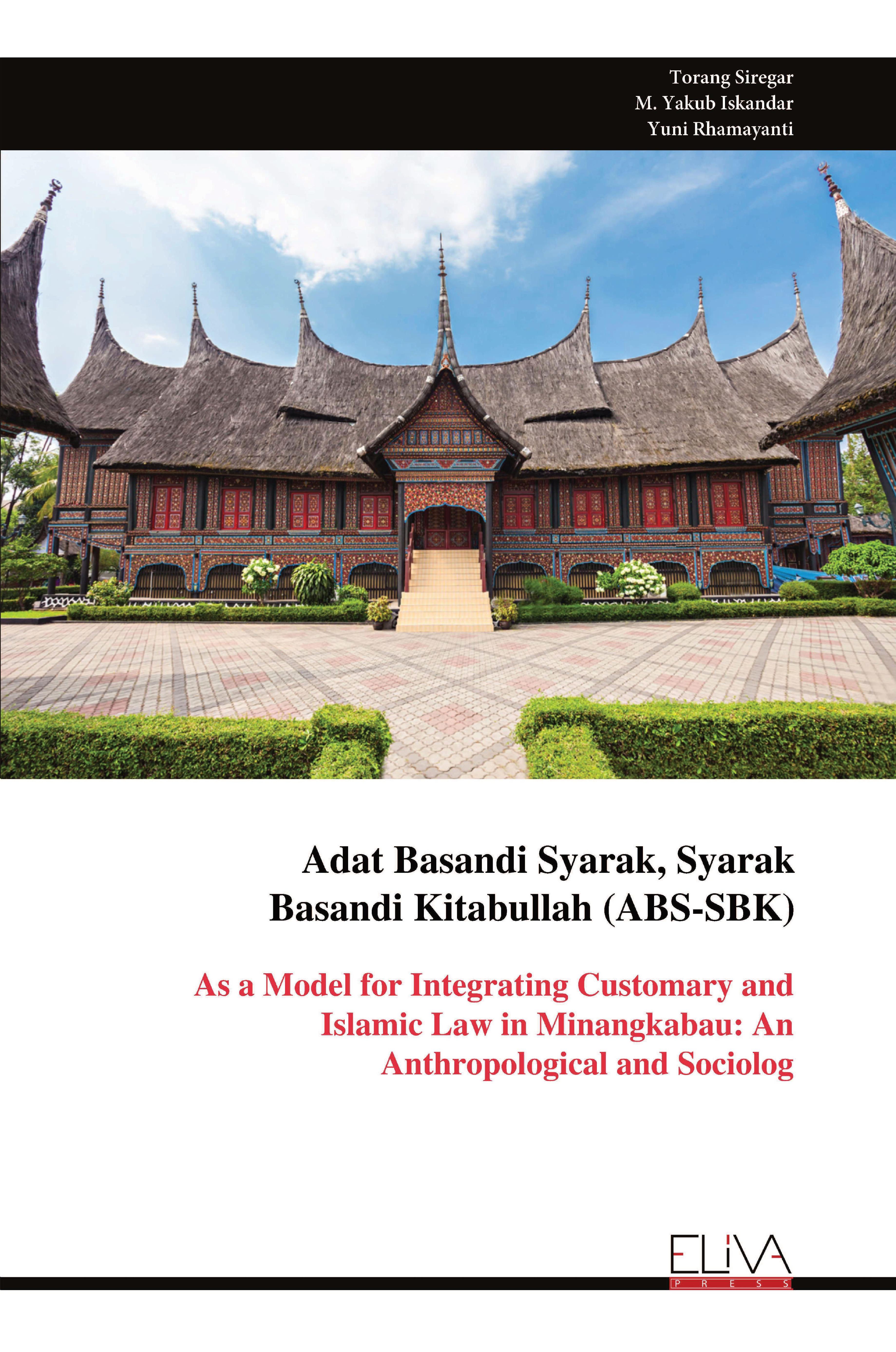
Adat Basandi Syarak, Syarak Basandi Kitabullah (ABS-SBK)
$ 70
Description
Leave review
Description
This study examines the integration of customary (adat) and Islamic law (syarak) in Minangkabau society through the philosophical framework of Adat Basandi Syarak, Syarak Basandi Kitabullah (ABS-SBK) as a model for resolving social and legal conflicts. The research addresses three central questions: (1) How does ABS-SBK function as a mechanism for integrating adat and Islamic law in Minangkabau? (2) What models of negotiation and conflict resolution are derived from this integration? (3) What strategies do ninik mamak (traditional leaders) and ulama (religious scholars) employ to maintain social harmony? This study employs juridical empirical methods with anthropological and sociological approaches. Data were collected through interviews with ninik mamak, ulama, and community members, alongside literature studies. The findings reveal that ABS-SBK operates as a functional legal pluralism framework in which adat and syarak are not competing systems but complementary domains. The integration is manifested through the division of harta pusaka tinggi (high heirloom property) under customary law and harta pencaharian (acquired property) under Islamic faraidh law, reflecting a pragmatic functional division. Three hierarchical negotiation systems exist: Tahi Kaum (family-level negotiation), Tahi Suku (clan-level deliberation), and Kerapatan Adat Nagari (nagari-level council). The study concludes that ABS-SBK provides a sustainable model for legal pluralism in Indonesia, demonstrating that effective integration requires the simultaneous activation of both ninik mamak and ulama from the earliest stages of conflict. The Minangkabau experience offers a compelling alternative to state-centric legal unification, affirming that customary and religious legal orders can coexist productively when grounded in shared philosophical foundations.