


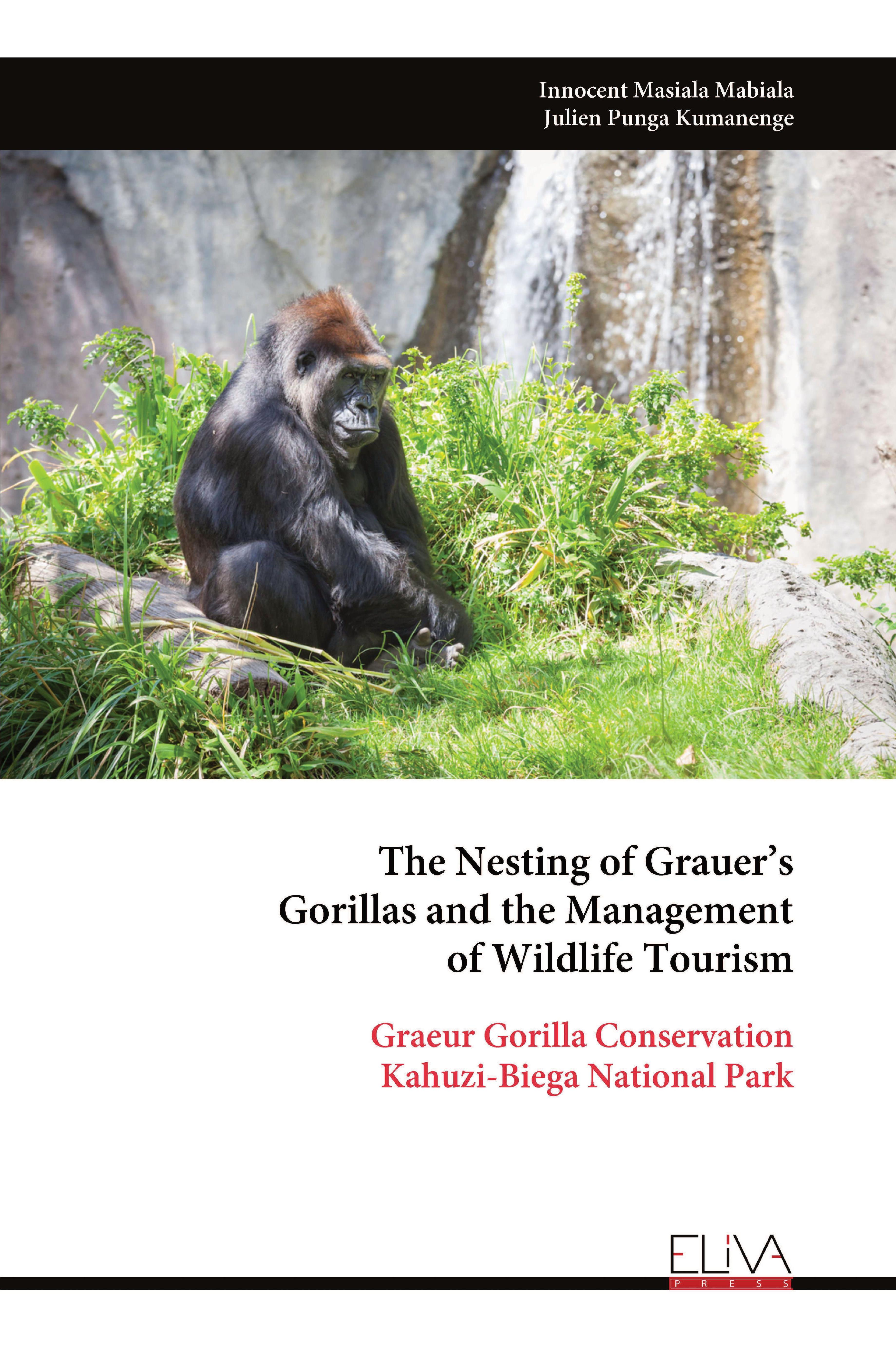
The Nesting of Grauer’s Gorillas and the Management of Wildlife Tourism
$ 45.5
Autor:
Innocent Masiala Mabiala
Pages:61
Published:
2026-10-27
ISBN:978-99993-5-980-1
Category:
Nowe wydanie
Description
Leave review
Description
Kahuzi-Biega National Park, in the eastern Democratic Republic of the Congo, currently hosts only 3,815 eastern lowland gorillas (Grauer’s gorillas) according to a recent survey conducted by the Wildlife Conservation Society (WCS) led by Dr. Andrew Plumptre. At higher altitudes, there are approximately 170 individuals of Grauer’s gorilla (Gorilla beringei graueri, Hominidae, Primates), including 143 regularly monitored as follows: 10 adult males, 58 adult females, 9 blackbacks, 20 sub-adults, 17 juveniles, and 29 infants, grouped into 9 semi-habituated families and 2 habituated families (the Chimanuka family and the Banonane family). The Chimanuka family consists of 1 dominant silverback male, adult females, blackbacks, sub-adults, juveniles, and infants. Visitor satisfaction also results from observing fresh nests built by the gorillas before their visit. Grauer’s gorillas build nests every night on the site. Our study aims to: (i) identify fresh nests built by Grauer’s gorillas in the different sectors of high altitude areas; (ii) characterize the dominant vegetative materials by layer and by season that show preference in the construction of nest types; (iii) determine the part of vegetative material most used in nest construction; (iv) assess the regenerative aspect of fruit trees at terrestrial nest sites by season; (v) identify the heights used in constructing different types of aerial nests and their pattern of habitat use by season. Using the method of reconnaissance walks, direct observation, and measuring the height of nests built on trees with a measuring tape by climbing the trees with a rope to assess the vertical distance between the base and the nests. EXCEL software was used to represent diagrams of nest types and the averages of the strata. The study was able to identify the areas visited by the Chimanuka family gorillas by season, with more areas visited during the rainy season than in the dry season. The categories of terrestrial and aerial nests showed that there were more terrestrial nests in the rainy season than in the dry season.