


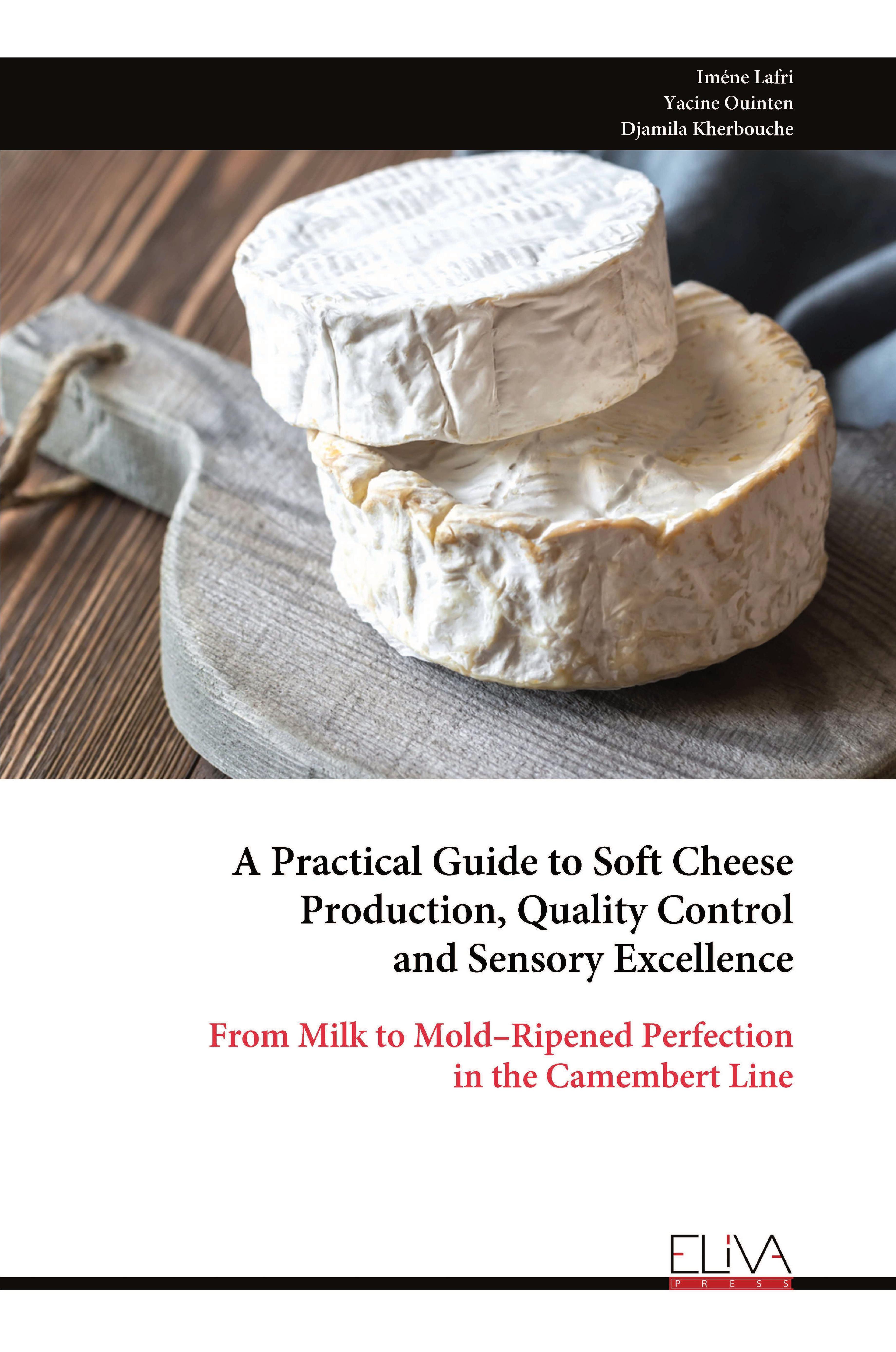
A Practical Guide to Soft Cheese Production, Quality Control and Sensory Excellence
$ 42.5
Description
This guide follows Camembert from its historical roots to its place as a modern, industrially produced soft cheese, using it as a model to explain how milk, microbes, salt, and time interact to create high–quality mold–ripened cheeses. The opening chapters introduce the fundamentals of cheesemaking, describe different types of milk (raw, pasteurized, recombined), and explain the roles of starter cultures, rennet, and surface molds such as Penicillium camemberti and Geotrichum candidum in building texture and flavor. The book then walks through the production line in detail, from milk reception and standardization to coagulation, cutting, draining, molding, and especially salting, presented as a decisive lever for safety, rind formation, ripening speed, and taste balance. Practical comparisons between dry salting and brine salting highlight how salt distribution and water activity must be controlled in the first 24–48 hours to avoid defects such as excessive surface mold, rubbery texture, or under–salted, unstable cores. A substantial section is devoted to ripening as a controlled ecosystem, showing how temperature, humidity, air flow, and light shape the growth of molds, yeasts, and bacteria and drive the key biochemical transformations: lactose fermentation, lipolysis, and proteolysis. Readers learn how these processes shift pH, soften the curd from the rind inward, and generate the characteristic mushroom, buttery, and nutty notes of a well–made Camembert, while also understanding the risks of over–ripening, rancid fat, or bitter peptides. The guide also addresses microbiological safety and regulation, outlining major pathogens of concern in soft cheese, the logic of process and product testing, and the impact of recent EU rules that tighten Listeria monocytogenes criteria over the entire shelf life. Alongside pathogens, it explains the use of indicator organisms and basic hygiene principles that link plant practices to final product safety. Finally, the book connects analytical control to the consumer experience through structured sensory evaluation, proposing descriptors for appearance, aroma, texture, and flavor that define an excellent Camembert.