


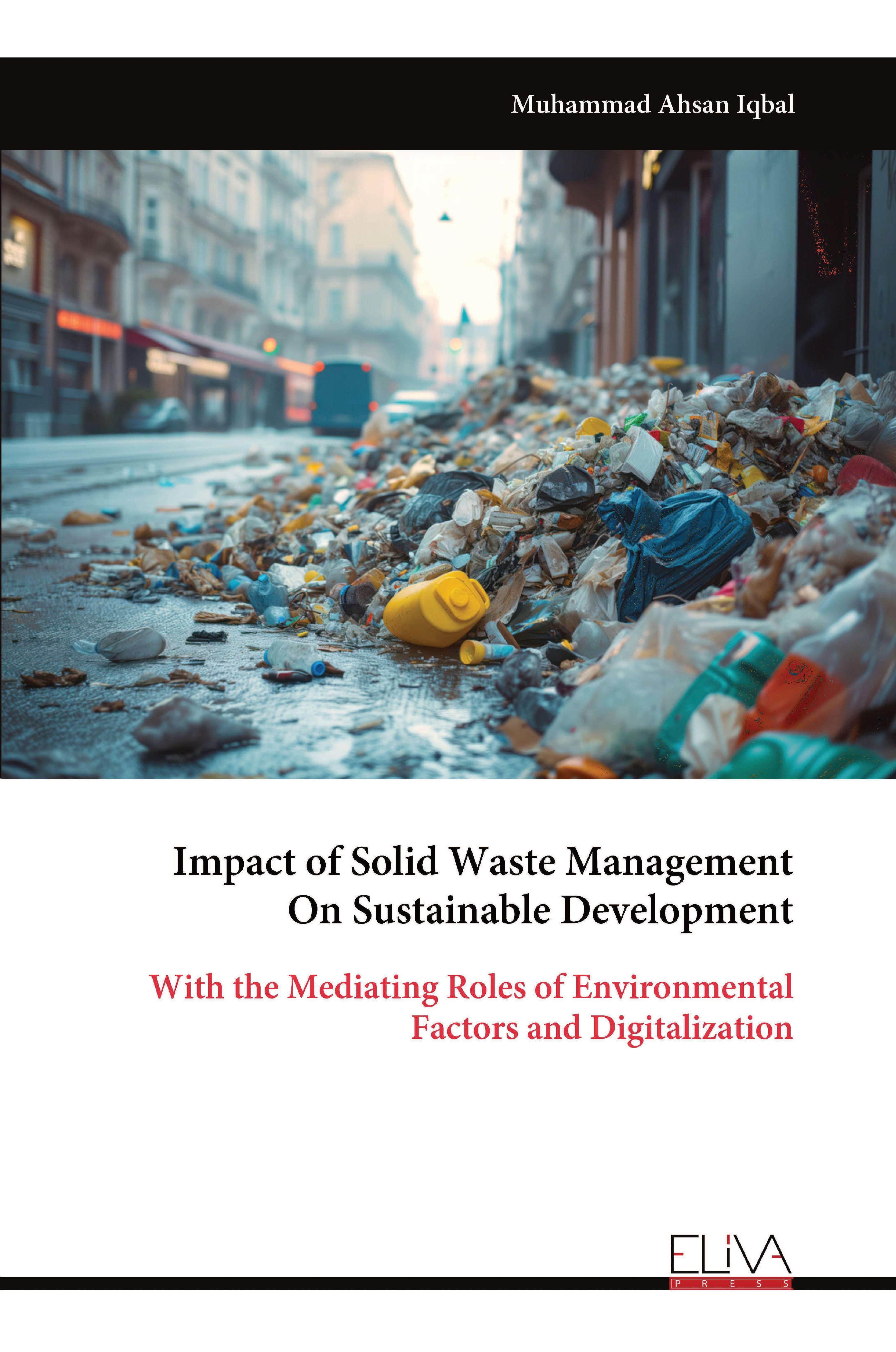
Impact of Solid Waste Management On Sustainable Development
$ 99
Description
This research examines the impact of Solid Waste Management (SWM) on sustainable development in Khyber Pakhtunkhwa, Pakistan, with particular emphasis on the mediating roles of environmental factors and digitalization. Drawing on evidence from seven Water and Sanitation Services Companies (WSSCs), the study explores how effective waste collection, disposal, recycling, environmentally responsible practices, and technology-driven solutions can contribute to environmental protection, economic progress, and social well-being. Against the backdrop of rapid urbanization, population growth, increasing waste generation, and inadequate municipal infrastructure, the research addresses critical challenges confronting the public-sector waste management system. It highlights the potential of digitalization to enhance operational efficiency, transparency, data-driven decision-making, and service delivery, while examining the importance of environmental considerations in achieving sustainable outcomes. The study offers valuable insights for policymakers, municipal authorities, public-sector organizations, and researchers seeking integrated, innovative, and sustainable waste management solutions. Ultimately, it contributes to the broader discourse on sustainable urban development and the achievement of the United Nations Sustainable Development Goals (SDGs).