


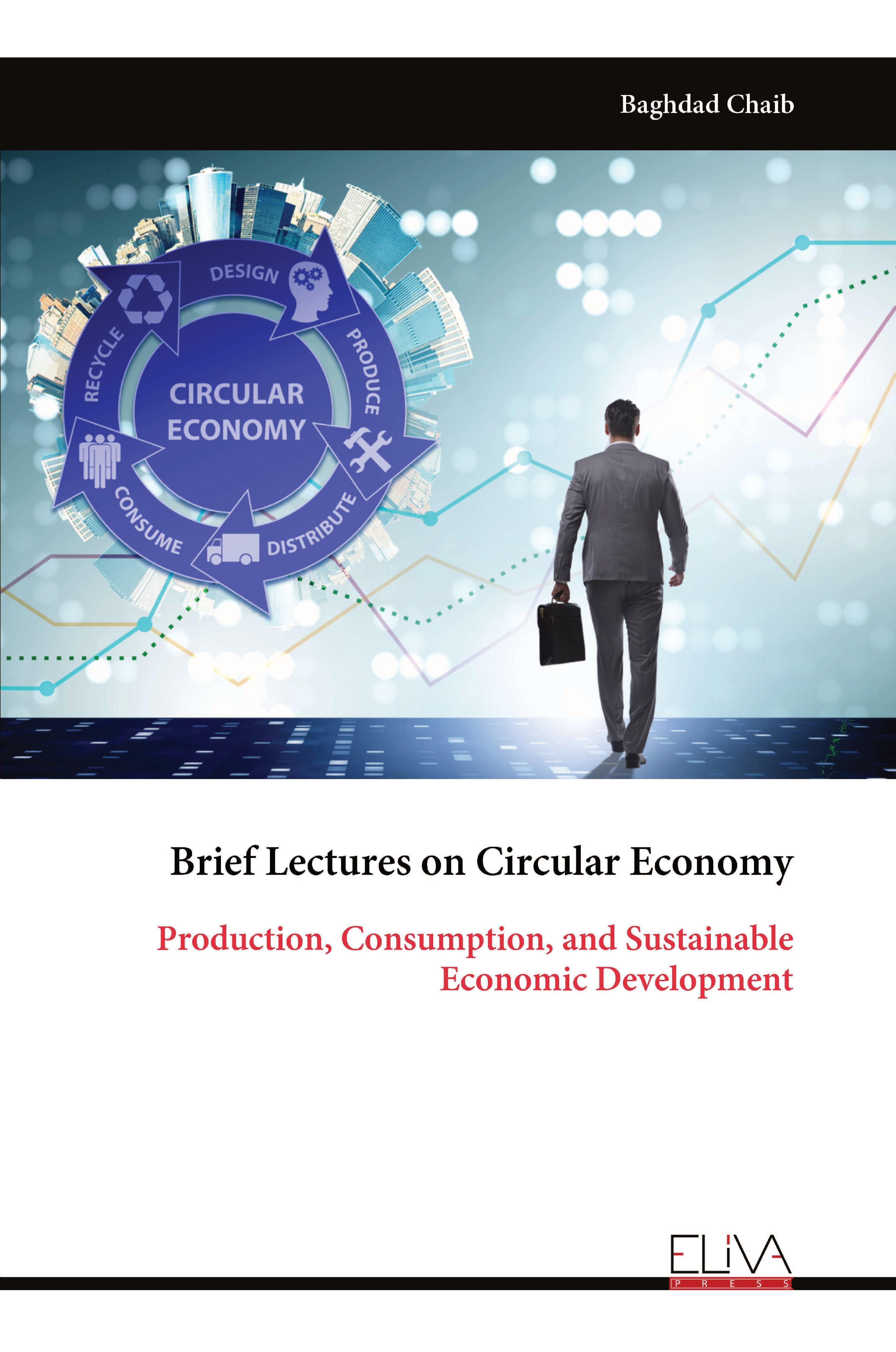
Brief Lectures on Circular Economy
$ 54.5
Description
Leave review
Description
Recent developments in the international economy concerning natural and climate change, as well as the proliferation of rather worrying and critical social phenomena, such as poverty, hunger and famine, malnutrition and undernourishment, precariousness and social exclusion, have prompted States and international institutions to seriously consider the steps and initiatives to be taken to solve some of these problems, also taking into account the spectacular and astonishing growth of the world's population, which is currently approaching eight billion individuals.
Another source of concern and worry relates to the depletion and reduction of natural reserves and resources, such as oil, gas, potassium, uranium, coal, zinc and others, which have contributed enormously to economic growth, as well as to almost immediate and appropriate responses to consumer expectations, but by using, for this purpose, sometimes in an excessive manner, these resources, consequently leading to serious imbalances between supply and demand, and creating, moreover, conflicts and disagreements between States at the market level and a worsening of development gaps between nations.
Taking into account this more complicated and delicate situation and state of affairs, contemporary economic theories have recently focused on resolving these observed dysfunctions and disturbances and their consequences on production and consumption, through studies on other mechanisms which must and can both maintain a growth rate of international economic production (industrial, agricultural, manufacturing and others) and keep pace with the growth rate of global consumption, through a new form of economic science, namely the circular economy, which should, in principle, act in this balance but also in other concerns and fears linked to the fundamental contemporary question of sustainable development.
We propose in this essay on the theme of circular economy which is, admittedly, a new theme in the field of economics, but finds its essence in classical and neo-classical theories, particularly in the field of microeconomics and the analysis of the behavior of producers and consumers.