


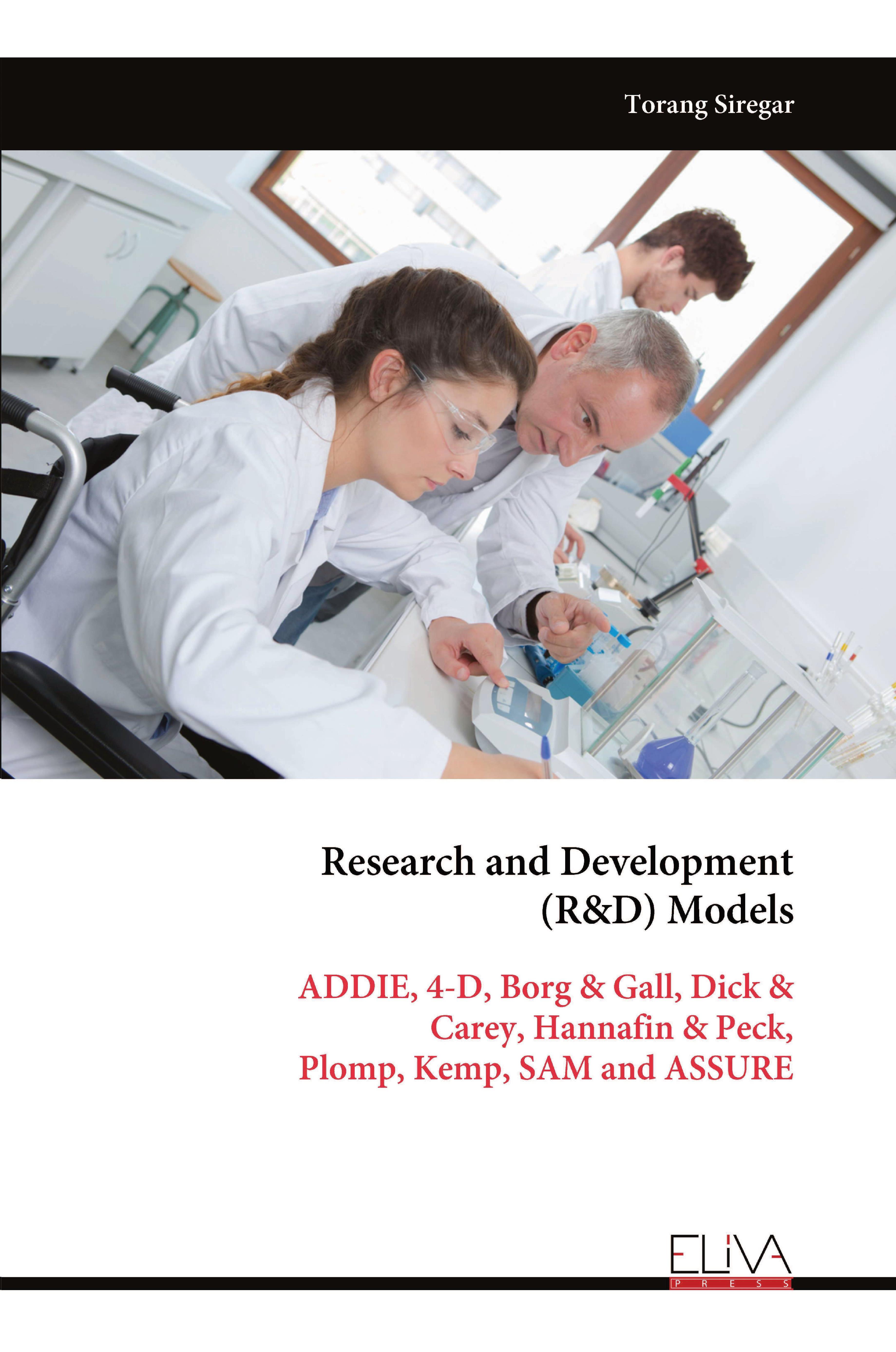
Research and Development (R&D) Models
$ 90
Description
Leave review
Description
The field of educational research and product development has witnessed significant evolution, particularly in the application of systematic models to ensure valid, effective, and practical outcomes. Research and Development (R&D) methodology, as conceptualized by Borg and Gall (1983), provides a structured framework for creating and validating educational products, from instructional materials to comprehensive learning systems .
This book presents a comprehensive examination of nine prominent instructional design and development models: ADDIE, 4-D, Borg & Gall, Dick & Carey, Hannafin & Peck, Plomp, Kemp, SAM, and ASSURE. Each model offers unique approaches, strengths, and applications that address diverse educational contexts and needs. The systematic comparison and analysis of these models equip researchers, educators, and instructional designers with the knowledge to select and apply the most appropriate model for their specific development projects.
This book is structured into ten chapters. The first nine chapters are dedicated to a detailed exploration of each model, covering its historical origins, foundational theories, procedural steps, applications, strengths, and limitations. The final chapter provides a comparative synthesis, offering guidance on model selection based on project characteristics, available resources, and contextual factors.
The content is organized to facilitate both comprehensive study and targeted reference. Each model chapter follows a consistent structure: introduction and historical background, detailed exposition of the development phases or steps, discussion of supporting theoretical foundations, presentation of key components and their interrelationships, analysis of strengths and limitations, and examples of practical applications.
This book is intended for graduate students, researchers, educational practitioners, and instructional designers engaged in educational product development, curriculum design, and instructional innovation. It is hoped that this resource will contribute to the rigor and effectiveness of educational R&D endeavors and promote the advancement of evidence-based educational practices.