


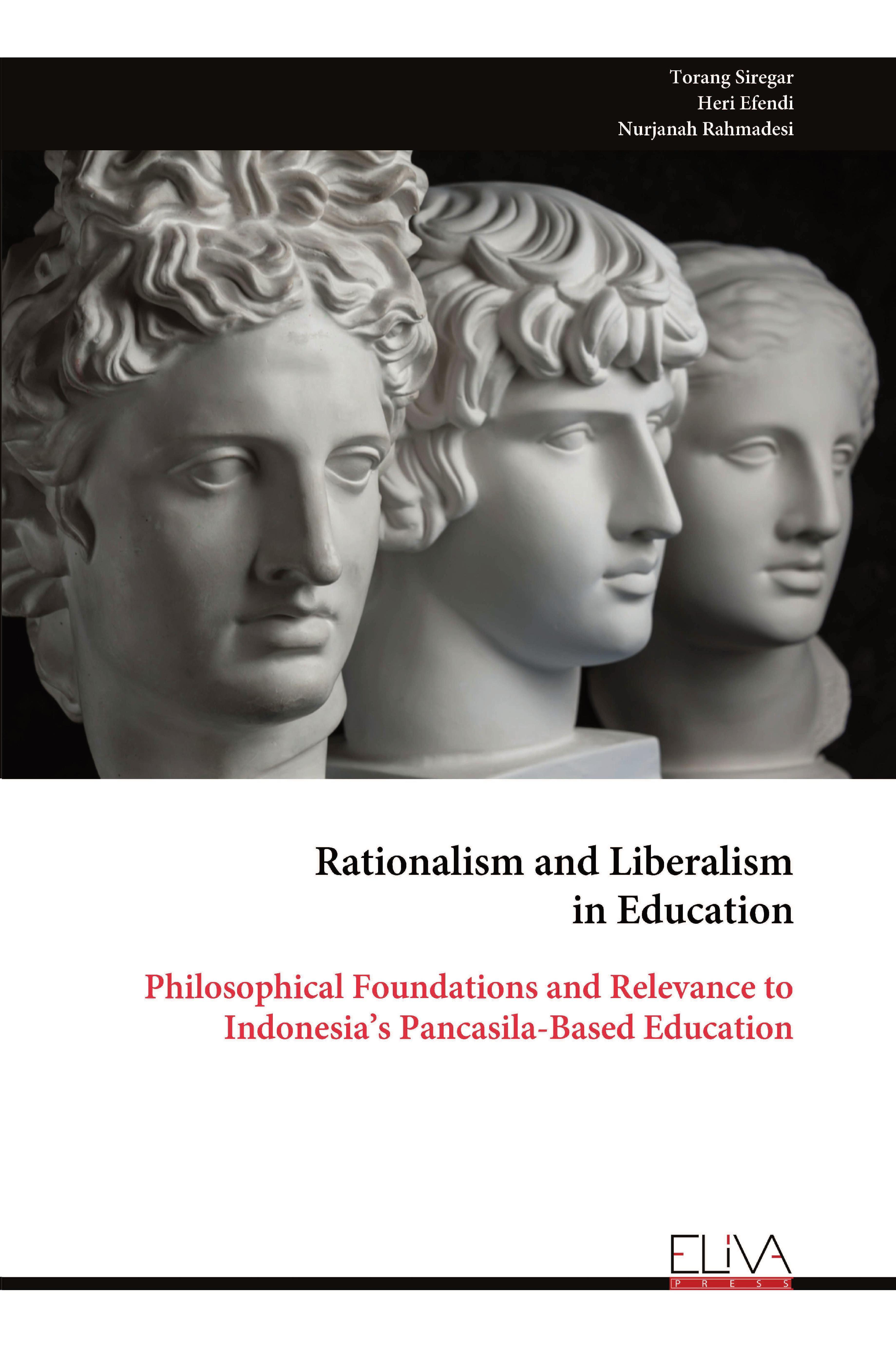
Rationalism and Liberalism in Education
$ 120
Description
Leave review
Description
What is the philosophical foundation of education, and how do ideas about reason, freedom, human dignity, and individual autonomy shape the way people teach and learn?
Rationalism and Liberalism in Education offers a comprehensive exploration of two influential philosophical traditions that have profoundly shaped modern educational thought. Through historical analysis, conceptual examination, comparative discussion, and practical applications, this book investigates how rationalism and liberalism contribute to the development of educational objectives, curriculum, pedagogy, assessment, and institutional governance.
Beginning with the philosophical foundations of education, the book examines the ontological, epistemological, and axiological dimensions of rationalism and liberalism. It explores the intellectual contributions of Plato, René Descartes, Baruch Spinoza, Gottfried Wilhelm Leibniz, Immanuel Kant, John Locke, Jean-Jacques Rousseau, John Stuart Mill, John Dewey, and John Rawls. Their ideas provide a foundation for understanding the relationship between reason and experience, knowledge and freedom, individual autonomy and collective responsibility, and intellectual development and moral education.
Beyond theoretical discussions, this book translates philosophical perspectives into practical educational applications. It explores critical inquiry, independent learning, democratic participation, reflective thinking, student autonomy, and evidence-based decision-making. It also presents a five-stage pedagogical framework integrating rational inquiry with learner freedom, alongside illustrative applications in history and social studies education.
A distinctive contribution of this publication is its contextual examination of rationalism and liberalism within Indonesia's Pancasila-based educational philosophy. It discusses the educational ideas of Ki Hadjar Dewantara, the principles of Merdeka Belajar, the development of bernalar kritis, and the challenges of digital transformation, disinformation, and generative artificial intelligence. Rather than adopting Western philosophical traditions uncritically, the book proposes a culturally rooted approach that con.