


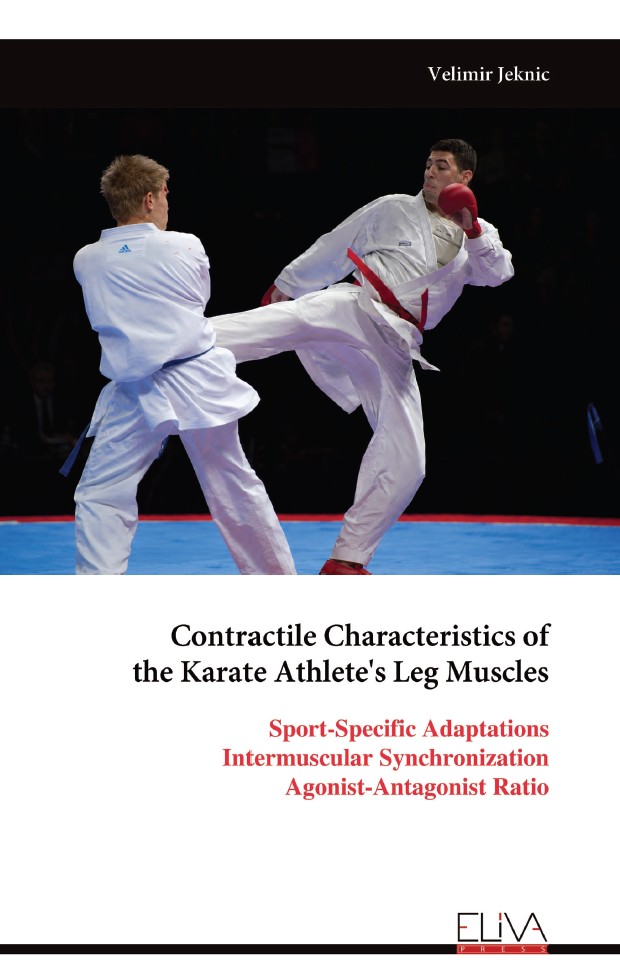
Contractile Characteristics of the Karate Athlete's Leg Muscles
$ 70
Description
Leave review
Description
Contractile Characteristics of the Karate Athlete's Leg Muscles presents a comprehensive scientific examination of the neuromuscular profile of karate athletes, offering valuable insights into the contractile behavior of the lower-limb muscles that underpin high-level performance in this complex combat sport. Drawing upon extensive experimental research, the book integrates assessments of both voluntary and involuntary muscle contractions to provide a multidimensional understanding of the physiological adaptations associated with long-term karate training. The presented findings are based on the application of advanced biomechanical and neuromuscular assessment techniques, including isokinetic dynamometry and tensiomyography (TMG), enabling detailed evaluation of muscle strength, contraction velocity, contractile timing, muscle stiffness, and neuromuscular coordination. Through comparisons between competitive karate athletes and students of a police academy, the book establishes important reference values while identifying sport-specific adaptations that distinguish elite performers from physically active non-athletes. Special attention is devoted to the functional characteristics of the knee extensors and flexors, bilateral asymmetries, agonist-antagonist relationships, coordination indexes, and coactivation patterns. The analysis highlights how years of systematic karate training influence neuromuscular efficiency, explosive performance, and movement control, contributing to both athletic success and injury prevention. By combining rigorous scientific methodology with practical interpretation, this book bridges the gap between laboratory research and real-world athletic performance. It serves as a valuable resource for researchers in sports science, biomechanics, kinesiology, and exercise physiology, as well as strength and conditioning coaches, karate instructors, sports medicine practitioners, physiotherapists, and graduate students seeking an evidence-based understanding of the neuromuscular mechanisms underlying karate performance. Beyond its relevance to karate, the findings provide broader insights into neuromuscular adaptation.