


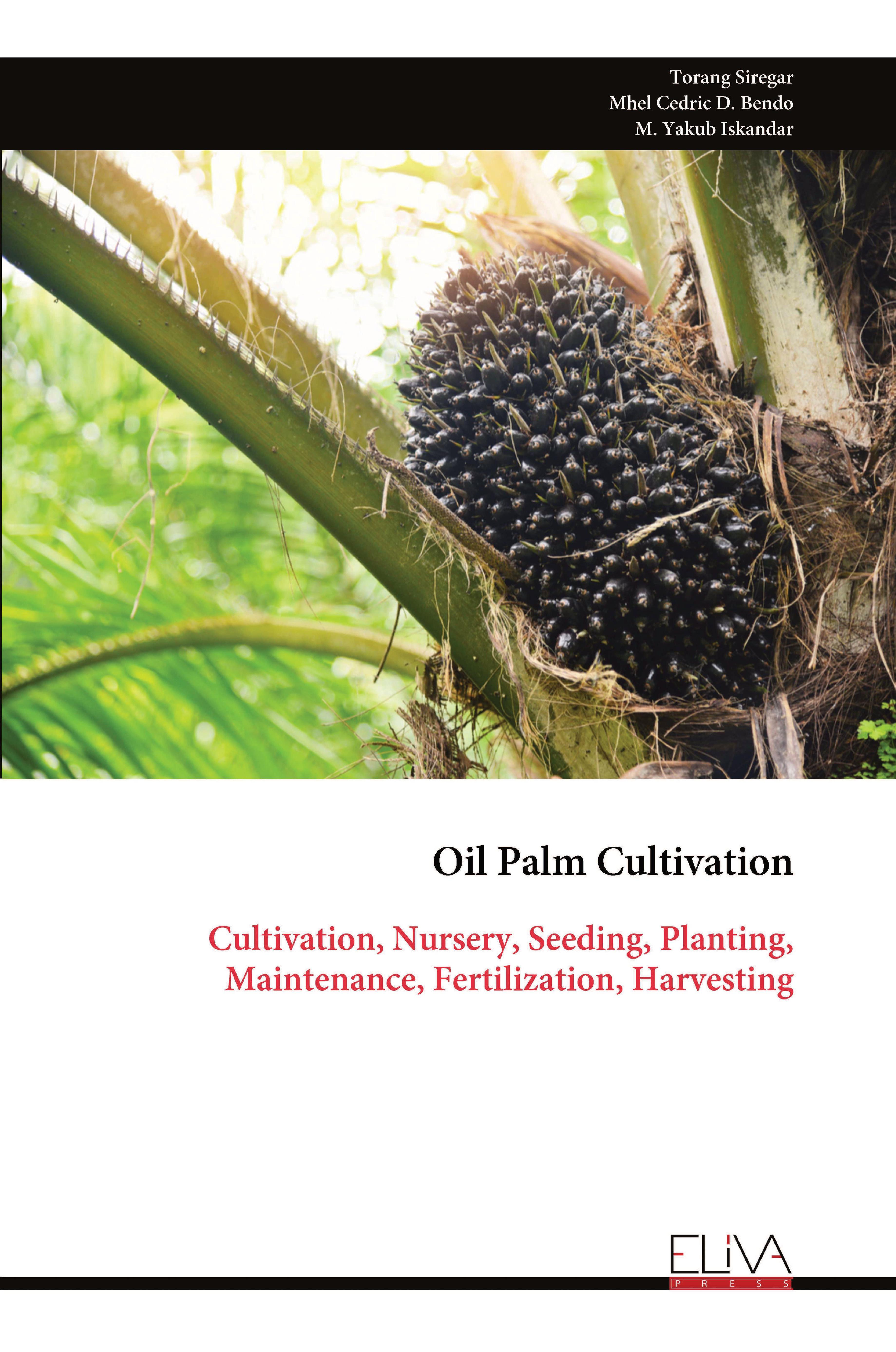
Oil Palm Cultivation
$ 99
Description
Leave review
Description
Oil palm is one of the world's most economically significant plantation crops. Its products—crude palm oil and palm kernel oil—are essential to food, cosmetics, and industrial supply chains across the globe. For Indonesia, the world's largest producer, oil palm cultivation supports millions of livelihoods and contributes substantially to rural development and export earnings.
Yet achieving high yields is not a matter of chance. It demands meticulous attention to every stage of the production cycle—from the selection of superior seeds and careful nursery management to disciplined field establishment, precise fertilization, and timely harvesting. Errors at any stage can reduce productivity and profitability for years to come.
This book provides a comprehensive, practical, and scientifically grounded guide to oil palm cultivation. Drawing on authoritative sources including the Indonesian Ministry of Agriculture, the Indonesian Oil Palm Research Institute (PPKS), the Food and Agriculture Organization (FAO), and leading international research institutions, it covers:
Seed Selection and Germination — protocols for breaking dormancy and achieving uniform, high-percentage germination
Pre-Nursery and Main Nursery Management — polybag sizing, media composition, spacing, watering, and seedling selection
Land Preparation and Planting — site selection, cover crops, pegging, planting density, and transplanting techniques
Immature and Mature Palm Maintenance — weeding, castration, pruning, and integrated pest and disease management Fertilization Principles and Practices — nutrient requirements, soil and leaf analysis, dosage calculations, and application methods
Harvesting and Post-Harvest Handling — ripeness criteria, fraction classification, harvest intervals, and quality parameters (OER and FFA)
Sustainable Cultivation — best management practices, certification schemes (RSPO,ISPO), and climate-smart approaches Written for plantation managers, field supervisors, agronomists, students, and smallholders, this book combines established agronomic principles with operational details—spacing specifications, polybag sizes, fertilizer rates, and harvest intervals—presented in clear.