


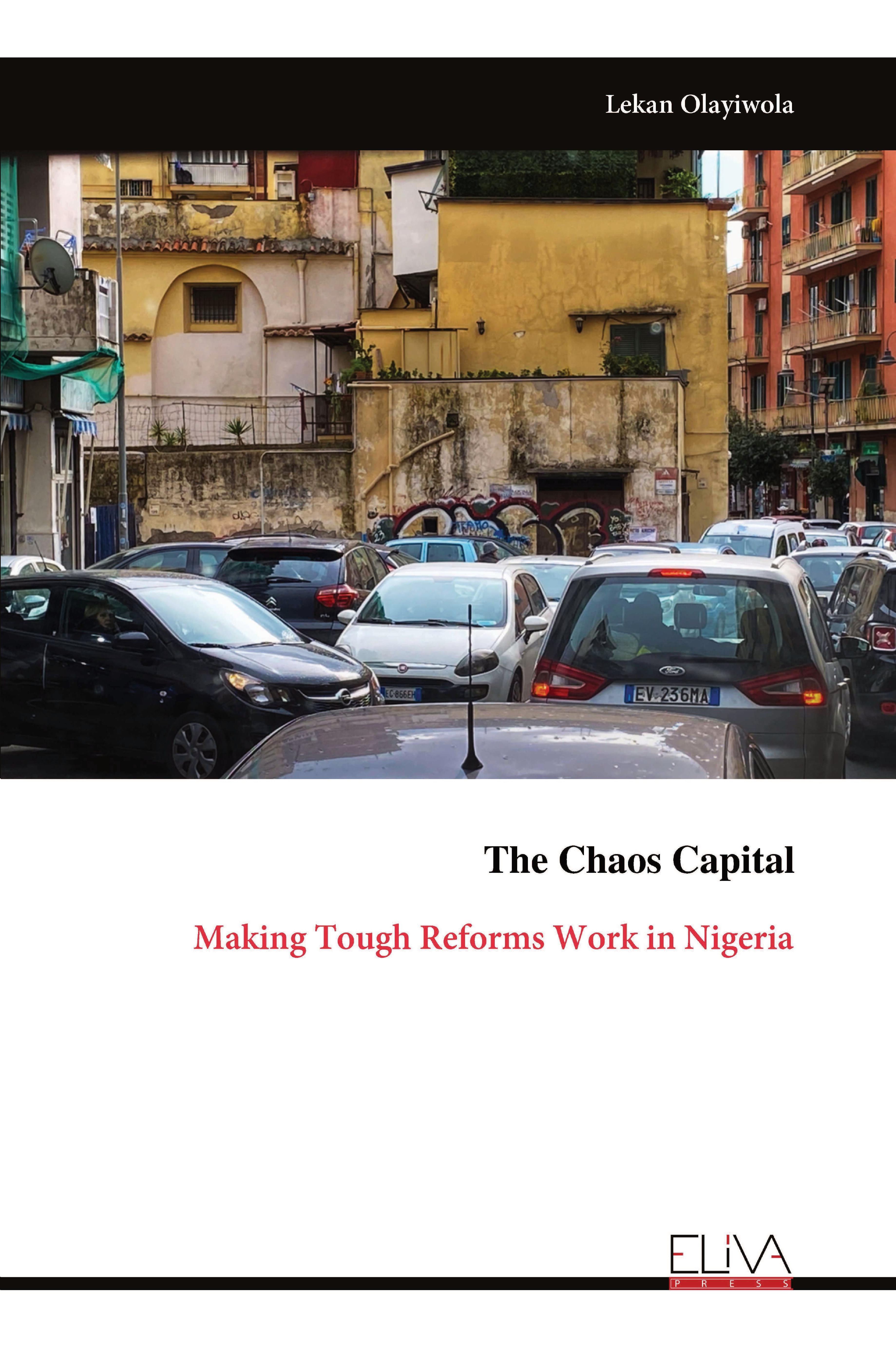
The Chaos Capital
$ 75
Description
The Chaos Capital begins with a deceptively simple proposition. Nigeria has already paid for an enormous amount of institutional learning through failure. The problem is that it has not systematically converted that experience into institutional capability. The book follows the hidden costs of dysfunction from public funds lost through weak procurement and uncollected revenue to the private costs of unreliable electricity, insecurity, administrative delays, informality and institutional distrust. It examines what happens when people must build workarounds because formal systems are too slow, expensive or unpredictable, and how entire markets emerge around problems that institutions have failed to solve. But this is not another catalogue of everything wrong with Nigeria. The Chaos Capital asks the harder question: what can the evidence of failure teach us about building systems that work? Drawing on public finance, procurement, taxation, security, informality, institutional economics and practical reform experience, Lekan Olayiwola moves from diagnosis to mechanism. He examines how governments can make problems visible, trace decisions, reduce unnecessary discretion, measure outcomes, test reforms, learn from failure and preserve what works. The argument is neither that chaos is good nor that suffering creates prosperity. Chaos becomes capital only when the accumulated evidence of failure is converted into knowledge, capability and institutional memory. For Nigeria, reform need not begin with perfect government. It can begin with a problem that is visible, a mechanism that can be changed, an outcome that can be measured and an improvement that can be retained. The Chaos Capital is therefore not a book about accepting dysfunction. It is a practical argument for learning from it—and turning the evidence of what has gone wrong into the capacity to build what works.