


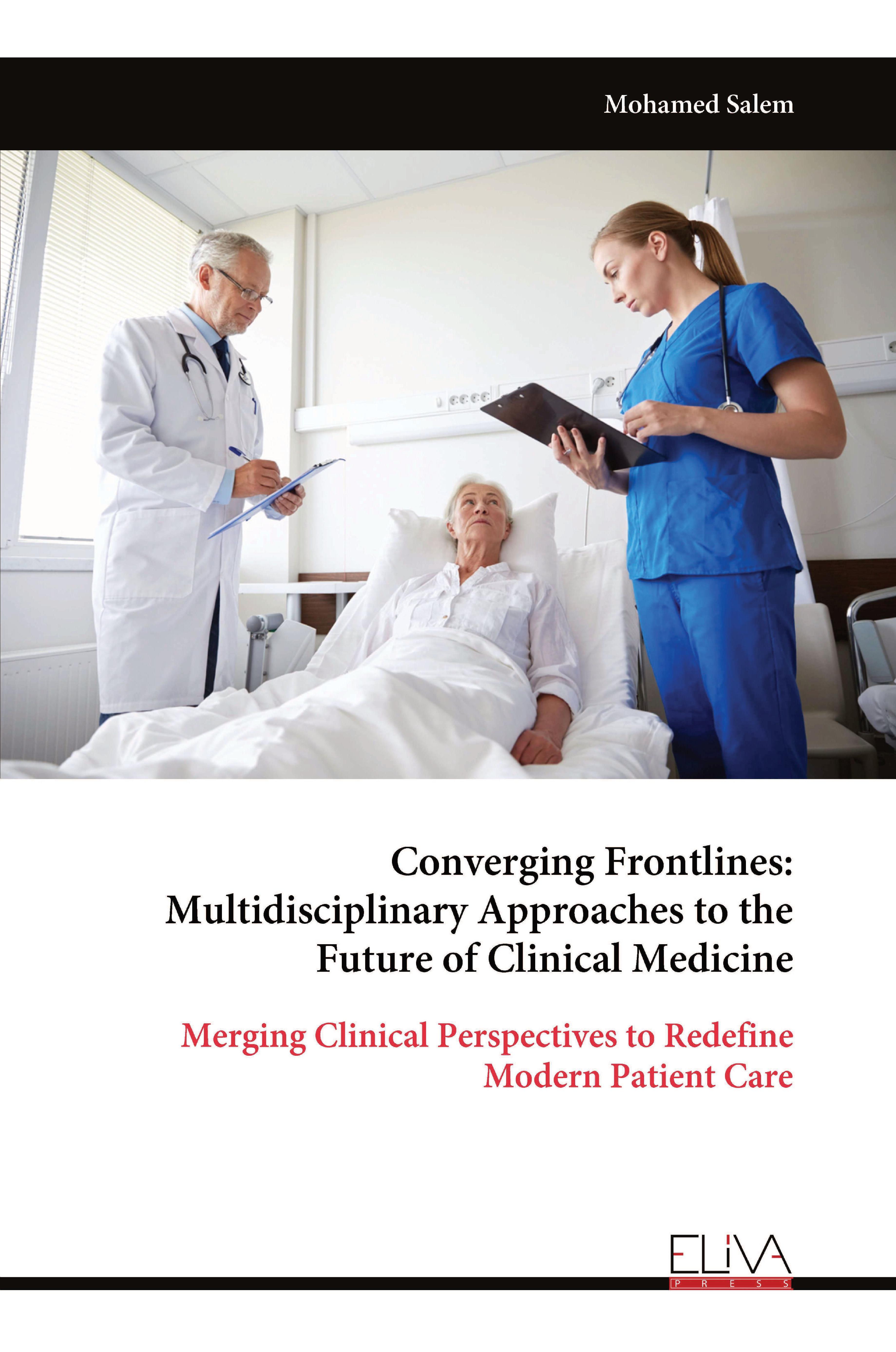
Converging Frontlines: Multidisciplinary Approaches to the Future of Clinical Medicine
$ 45.5
Description
In an era where clinical care is rapidly evolving, Converging Frontlines: Multidisciplinary Approaches to the Future of Clinical Medicine offers a timely exploration into the collaborative forces reshaping patient outcomes. From operating rooms to outpatient clinics, medicine is no longer practiced in silos. This book brings together a powerful collection of essays that examine how interdisciplinary teamwork, technological innovation, and patient-centered strategies are transforming modern care delivery. Author Mohamed Salem, a nationally recognized researcher and future physician, delves into pressing issues such as perioperative optimization, subclinical atherosclerosis, climate-driven health crises, and the integration of AI in clinical decision-making. Each chapter presents a well-researched, accessible analysis grounded in current evidence while offering bold visions for the future. Topics range from stroke care pathways and anticoagulation strategies to the ethical imperatives of health equity and regenerative medicine. Whether you're a medical student, resident, or practicing clinician, this book serves as a vital roadmap to navigate the increasingly complex healthcare landscape. It emphasizes the power of merging clinical perspectives—across specialties, roles, and systems—to improve outcomes, reduce risk, and ensure equitable access in the age of medical advancement. Converging Frontlines is more than a medical analysis; it’s a call to action for a future where collaborative care is the standard—and where every patient benefits from the strength of an integrated clinical vision.
The book offers a compelling guide to the future of medicine, where teamwork, innovation, and equity shape patient care. What stood out to me most was Salem’s discussion of AI in clinical decision-making—he strikes the perfect balance between optimism and caution, showing how technology can enhance judgment without replacing human expertise. The book’s strength lies in its accessibility: complex topics like perioperative optimization, stroke care, and climate-driven health crises are explained clearly while highlighting the need for collaboration across specialties. For students, residents, and clinicians alike, this is more than a medical text—it’s a vision of care that is both forward-looking and deeply patient-centered.
Salem brings a rare level of clarity to how different specialties communicate. The examples felt real, and the emphasis on collaboration is exactly what medicine needs right now.
Fourteen years in critical care, and I can say the descriptions of interdisciplinary teamwork in this book are accurate and grounded. Nothing felt exaggerated or disconnected from real clinical practice.
This book is ahead of its time. It speaks the language of clinicians while pushing for innovation and smarter care models. Anyone working at the intersection of medicine and technology should read this.
I appreciated the author’s respect for every discipline — surgery, nursing, anesthesiology, internal medicine. Salem gets that modern medicine is a team sport, not a hierarchy. His section on perioperative coordination was excellent.